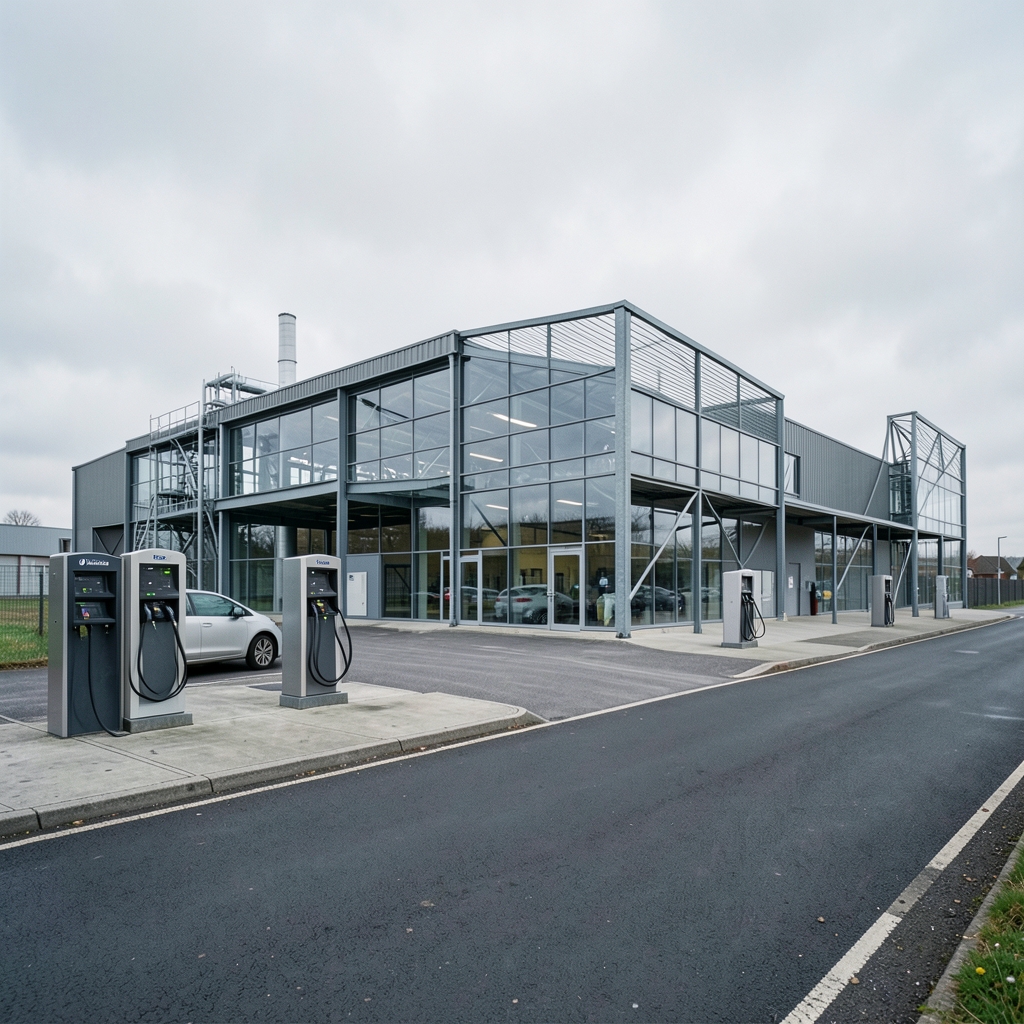
UK startup Altilium bags £18.5m to build Britain's first commercial EV battery refinery
At a glance:
- Altilium secures £18.5m grant to build the UK's first commercial EV battery refinery in Plymouth
- The ACT3 facility will process 24,000 EV batteries annually using the EcoCathode™ process, producing battery-grade materials with 74% lower carbon emissions
- A second DRIVE35 grant funds research with JLR and Warwick Manufacturing Group to produce UK EV battery cells with recycled cathode and anode materials
Government funding accelerates UK battery recycling
The £18.5 million comes through the DRIVE35 Scale-Up Fund, a programme delivered by the Department for Business and Trade in partnership with the Advanced Propulsion Centre UK and Innovate UK. DRIVE35 sits within the UK government's broader £2.5 billion commitment to accelerate domestic electric vehicle supply chain and battery manufacturing capacity. At a moment when private investment in European climate technology fell to a five-year low in early 2025, government-backed industrial grants have become an increasingly critical source of capital for companies building the physical infrastructure the energy transition requires.
Altilium, which had previously raised over £17 million in private investment from strategic partners including Marubeni Corporation and Mizuho Bank, described the announcement as a pivotal moment. "This funding marks a pivotal moment for Altilium and for the UK's battery ecosystem," said Dr Christian Marston, COO and co-founder. "By scaling our recycling technology and building the UK's first commercial facility of its kind, we are closing the loop on battery materials and enhancing the growth, productivity and competitiveness of the UK automotive supply chain." The grant is also expected to unlock additional private investment from new and existing shareholders.
The ACT3 facility and its capabilities
ACT3 will be built in Plymouth, Devon, where Altilium already operates the UK's only hydrometallurgical pilot plant for EV battery recycling. The facility's building is already complete; equipment installation is scheduled to begin in summer 2026, with commissioning targeted for the end of 2027. Once operational, ACT3 will process 24,000 end-of-life EV batteries per year using Altilium's EcoCathode™ hydrometallurgical process, which recovers more than 95% of cathode metals and more than 99% of graphite from battery scrap.
The outputs are the critical intermediate materials used in battery cell manufacturing: nickel mixed hydroxide precipitate, lithium sulphate, and graphite, all essential inputs for next-generation cathode and anode production. According to an independent lifecycle assessment, these recycled materials carry up to 74% lower carbon emissions than their mined equivalents. The plant will create 70 new jobs at the Plymouth site. Altilium is not alone in pushing this model toward commercial scale: Tozero launched Europe's first industrial battery recycling plant in Germany in March 2026, a signal that the continent's recovery capacity is building alongside the volume of batteries coming to end-of-life.
Addressing supply chain vulnerabilities
The strategic logic behind ACT3 is straightforward. Indonesia is the dominant global supplier of nickel mixed hydroxide precipitate, while China processes the majority of the world's lithium and graphite for battery production. British carmakers building EV supply chains are exposed to a compounded risk: geopolitical disruption, price volatility, and the export controls that China introduced on graphite in late 2024 and extended to a range of lithium-battery inputs through 2025. Trade tariffs compounded existing concerns about hardware and materials supply chain security across European industry in 2025, reinforcing the political and commercial case for domestic alternatives.
Altilium's recycling facilities offer a route out of that dependency. European battery companies can differentiate against Asian manufacturers on sustainability, recyclability, and regulatory compliance rather than on unit cost, and the provenance and carbon credentials of recycled British battery materials are precisely the kind of value proposition that allows them to do so. The recycled materials Altilium produces carry verified lifecycle assessment data showing a 74% emissions reduction, a figure that becomes increasingly material as automotive customers face their own pressure to decarbonise supply chains.
Expanding to a national battery recycling network
ACT3 is designed as the first step in a two-stage domestic build-out. Altilium's planned ACT4 facility in Teesside, north-east England, is sized to process 150,000 end-of-life EV batteries per year and to produce 30,000 tonnes of cathode active materials annually, enough on current projections to meet approximately 20% of UK demand for battery materials by 2030. Together, the Plymouth and Teesside facilities would represent the most substantial domestic battery material recovery infrastructure the UK has attempted to build.
The second DRIVE35 grant, announced simultaneously, funds a collaborative R&D project with JLR and Warwick Manufacturing Group. Building on a previous Advanced Propulsion Centre programme that demonstrated the UK's first battery cells produced from recycled cathode active materials, the new project extends the work to include recycled graphite on the anode side. "With the inclusion of recycled graphite in this new project, the UK will now have a viable route to produce both cathode and anode materials domestically," said Marston, calling it "an essential step for car manufacturers seeking supply chain resilience and sustainable battery materials."
International partnerships and market focus
Altilium's investor base has been built with an eye to the Japanese automotive market: Marubeni Corporation took a strategic position in January 2025, and Mizuho Bank followed in March 2025, providing access to supply chain networks and market intelligence in the region that will matter as Altilium scales. These partnerships position Altilium to potentially tap into Japan's advanced automotive sector and battery manufacturing capabilities.
2025 established AI as the defining technology of the decade, but the supply chain of recycled critical minerals that underpins the energy transition will prove just as foundational to the decade's technology story as the models that run on it. As the UK builds its domestic battery recycling capabilities, it's positioning itself as a key player in the global transition to sustainable transportation, with Altilium at the forefront of this critical infrastructure development.
FAQ
What is the EcoCathode™ process and how does it work?
How does Altilium's battery recycling compare to traditional mining in terms of environmental impact?
What are the next steps in Altilium's expansion plans?
More in the feed
Prepared by the editorial stack from public data and external sources.
Original article