Ebola cases in DRC rise to 676 as Kenya protests erupt over US quarantine plans
At a glance:
- Democratic Republic of Congo reports 676 Ebola cases amid CDC modeling warning of up to 20,000 infections in worst-case scenarios
- Trump administration's withdrawal from WHO and USAID downsizing weakens international response efforts
- Violent protests in Kenya leave at least three dead as citizens oppose US plans to establish quarantine facility at military base
What happened
The Democratic Republic of Congo (DRC) has confirmed 676 Ebola cases, according to recent health ministry data, as the outbreak continues to strain regional resources. In one of the CDC's worst-case scenarios, where only 20% of cases are effectively isolated, modeling projects over 20,000 infections and more than 4,000 deaths within three months. This escalation comes amid significant reductions in U.S. global health engagement, with the Trump administration's withdrawal from the World Health Organization (WHO) and the dismantling of the U.S. Agency for International Development (USAID) hampering coordinated response efforts.
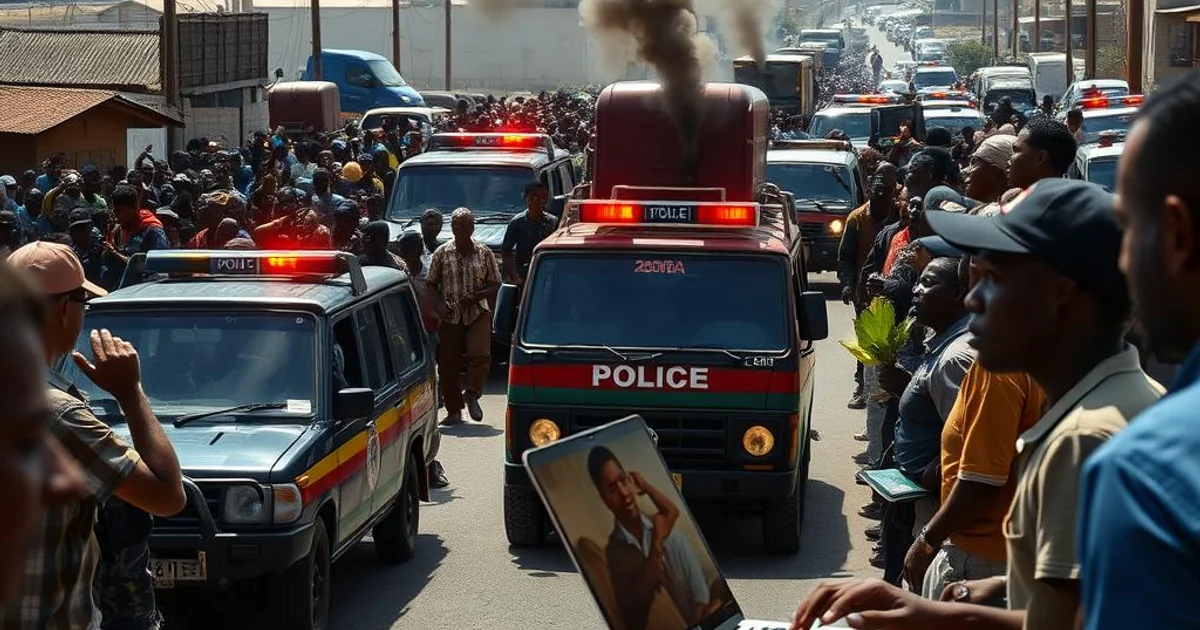
The crisis has taken an international turn as the U.S. seeks to establish a makeshift quarantine facility at a military base in Kenya, a nation currently unaffected by the outbreak. The plan has ignited fierce opposition among Kenyan citizens, who view the initiative as a threat to national biosecurity. Hundreds of protesters gathered in Nanyuki, the town nearest to the proposed facility, with demonstrations turning deadly after clashes with police. The Kenya Human Rights Commission confirmed that at least three protesters were killed during the unrest.
Why it matters
The Trump administration's isolationist approach has not only weakened its own capacity to respond to global health emergencies but also strained diplomatic relationships. By attempting to bar even U.S. citizens from returning home if exposed to Ebola, the policy reflects a stark departure from previous international health protocols. Kenya's resistance underscores broader tensions over how low-income nations are being asked to shoulder risks for wealthy countries' containment strategies. The Kenya Medical Practitioners Pharmacists and Dentists Union condemned the government's decision, stating, "We are utterly disgusted by the government's apparent willingness to trade national biosecurity and the lives of its citizens for foreign aid."
Despite a Kenyan court temporarily suspending the quarantine facility's activation, the U.S. continues to push forward with logistical preparations. The standoff highlights the fragility of international cooperation in managing cross-border health crises, particularly as funding cuts and political shifts erode traditional aid structures. For the DRC, the outbreak's trajectory remains precarious, with healthcare systems already stretched thin and vaccine distribution challenges persisting.
Broader implications
The situation in Kenya reflects a growing skepticism toward Western-led health interventions, especially in regions with histories of colonial exploitation. Analysts suggest that the U.S. approach may exacerbate mistrust in global health institutions, complicating future outbreak responses. Meanwhile, the WHO and remaining international partners face the challenge of filling gaps left by reduced U.S. funding, which historically accounted for over 10% of the organization's budget.
The DRC outbreak also serves as a test case for new global health security frameworks. With the U.S. retreating from multilateral efforts, questions arise about how low-resource nations can independently manage highly infectious disease threats. The crisis could accelerate discussions around reforming international health regulations, particularly around equitable access to treatments and transparent risk communication.
FAQ
What is the current status of Ebola cases in the Democratic Republic of Congo?
Why are protests erupting in Kenya over U.S. quarantine plans?
How has the U.S. withdrawal from WHO affected the Ebola response?
More in the feed
Prepared by the editorial stack from public data and external sources.
Original article